This is default featured slide 1 title

Go to Blogger edit html and find these sentences.Now replace these sentences with your own descriptions.

This is default featured slide 2 title

Go to Blogger edit html and find these sentences.Now replace these sentences with your own descriptions.

This is default featured slide 3 title

Go to Blogger edit html and find these sentences.Now replace these sentences with your own descriptions.

This is default featured slide 4 title

Go to Blogger edit html and find these sentences.Now replace these sentences with your own descriptions.

This is default featured slide 5 title

Go to Blogger edit html and find these sentences.Now replace these sentences with your own descriptions.

Jim Daniels 2020 Affiliate Marketing Master Swipe File

Earn reliable affiliate income, by truly helping people. Send them to this hype-free marketer with 22 years experience making his living online. This new 2020 product for affiliate marketers will bring you high EPC and low refund rates.

* This article was originally published here

Social Media Education Empowers the Next Generation of Marketing Mavens

University graduates who earn Hootsuite certification have a better understanding of the professional application of social media tools, concepts, and strategies for business, a recent study found.

A group of university professors and researchers examined the impact that social media certification program Hootsuite University’s certification program had on students, employers, and professors. The main findings go a long way in demonstrating the value that Hootsuite Certified graduates bring to today’s businesses.

The study, Hootsuite University: Equipping Academics and Future PR Professionals for Social Media Success, was published in the Journal of Public Relations Education, a publication “devoted to the presentation of research and commentary that advances the field of public relations education.” It explored the value to students who are enrolled in Hootsuite’s Higher Education Program in the classroom, the perceptions of employers who hire recent graduates, and the partnership between professors and Hootsuite.

Professors from five different universities worked together to research the topic.

The study authors were:

In order to study the impact of social media education, they conducted interviews with students, employers, and educators.

The social media skills gap

No one doubts that digital natives are skilled at using social media. What is becoming increasingly clear is that they need to learn how to transition the skills they use on personal accounts into the professional sphere.

Hootsuite CEO Ryan Holmes recently made the case that there’s a huge social media skills gap: “Nearly 90 percent of U.S. companies are currently using Twitter, Facebook, and other networks—all jockeying for their share of the estimated $1.3 trillion in value that social media stands to unlock. There’s just one small problem: The contemporary workforce is woefully ill-equipped to help companies unlock it… The clearest culprit is the breakneck proliferation of new platforms and features… At the same time, how social media is used in the workplace is fundamentally changing… Reports of social media gaffes and blunders in the workplace are still routine. Meanwhile, the real price of the skills gap often goes unnoticed—billions of dollars in missed opportunities and lost revenue.”

Study author and Syracuse University professor William Ward concurs that the skills gap is a pressing issue.

Ward explains: “The real problem is that we expect people to know these skills without providing any training. Social media know-how isn’t something you just pick up as a casual user. And it isn’t just older employees who are in the dark—millennial hires need training, too. Because somebody grows up being a social media native, it doesn’t make them an expert in using social media at work. That’s like saying, ‘I grew up with a fax machine, so that makes me an expert in business.’”

Empowering the next generation of marketing mavens

The study found that social media education empowered students, giving them the tools they needed to be successful.

In the paper’s conclusion, the authors wrote: “[Some students] felt the training they received from Hootsuite University not only empowered them, but gave them the confidence needed to become a leader within their organization.”

Of the students who responded to the post-certification survey, 82 percent indicated that they thought their Hootsuite University social media education would help them in their job search.

Emily Maher, one of the students interviewed for the paper, became a reporter for Hearst Television after graduating. Her Hootsuite University training became useful very soon after beginning her new job: “[Within] the first six to eight months I was there, they started using Hootsuite at work. Everyone else had a learning curve, so I was already ahead of the game.”

Another grad quoted in the study, Alex Ptachick, went on to work with USA Today’s social media team. She summed up the value of the training: “There’s really nothing quite like Hootsuite University in the sense that someone is actually telling you what to do, how to do it, and why it’s important that it’s done.”

Adelyn Biendenbach, director of digital for the Florida Panthers hockey team, explained how applicable Hootsuite training is to her position: “I use it for social listening to see every Tweet from and about our players and prospects. The season at a pro-sports team really is year-round with long hours and crazy busy days. I was able to so quickly jump into and adapt to this atmosphere because of the extensive training I already had in the Hootsuite software.”

Hootsuite was thrilled for our social media education to be the focus of this study. In addition to product training and certification through Hootsuite University, Hootsuite offers free social media education through Podium. Hootsuite has also partnered with industry and academic leaders on certifications, including the Advanced Social Media Strategy Certification with Syracuse University and the Social Media Basics Certificate for Healthcare with Mayo Clinic.

Learn more about Hootsuite’s social media education offerings today!

Learn More

The post Social Media Education Empowers the Next Generation of Marketing Mavens appeared first on Hootsuite Social Media Management.


* This article was originally published here

Super Affiliate System - John Crestani's Autowebinar Funnel

Converts on COLD BizOpp traffic. 50% Commission on $997 Frontend + $247/m OTO. 30% take rate on upsell. SAS is a 6-week course on PAID TRAFFIC to create an AFFILIATE MARKETING based business. Highest converting webinar funnel. 1:10 hop:O.F. Imp = good.

* This article was originally published here

How to Use Twitter for Business in 2016 and Beyond

At this point in your career, you might be feeling as if you’ve read everything you could possibly ever read about using social media for your business. However, the very nature of the industry means that networks and platforms are constantly evolving and changing. News and tips become outdated so quickly and regularly, making the role of a content marketer one of continuous re-learning and re-mastering previously understood techniques.

How to Use Twitter for Business

Because it exists in an almost constant state of change (often for the better),using Twitter for your business will mean keeping yourself up to date on all of the changes taking hold in 2016. With new features focusing on up-and-coming trends and best practices, the following guide will help you stay ahead of the curve—no professors required.

The future is animated

Sometimes the message you are trying to convey cannot accurately be described by words alone. Thankfully, the popularity of emojis, memes, and GIFs has skyrocketed, making the inclusion of such visual messages practically a language of their own.

As a animated images, GIFs add an extra touch to certain messages and can usually add a feeling or emotion that words alone cannot. Recognizing the power of the GIF, Twitter recently announced GIF search—a feature that will allow users to search a GIF library provided by GIPHY and Riffsy and easily include their chosen GIF in direct messages and Tweets. While your brand’s Twitter account might have previously included solely text or static images, 2016 will be filled with GIF-centric content. That new features announcement you’re going to Tweet about can now include a GIF of a surprised panda—an image that will appeal to your audience’s attention span and emotions more than a text-only Tweet could.

We were lucky enough to have GIPHY join us for a #HootChat recently, and they shared the following three key tips for using GIFS, all of which can be applied to your business’ Twitter strategy in 2016.

1. Context is key: Now that you can easily search and include GIFs in your Twitter content, it’s tempting to just choose the first one that catches your eye to include alongside your content. However, as we explained previously, “Before you share anything, you should make sure that you know what that context is so that you don’t accidentally share a GIF that definitely doesn’t mean what you thought it did.” In 2016, everything has the potential to become a GIF (and I mean everything), so ensure that you’re not sharing moments from potentially awkward sources. If you can’t explain the context of a certain GIF to your parents, you might want to refrain from including it alongside your branded Twitter content.

2. Avoid being too casual: While it’s tempting to continuously use that Step Brothers bunk bed GIF (eight years old, by the way), if you’re continuously being purely silly through your image selection you run the risk of alienating certain audience members. As the GIPHY team explained to us, “It’s like reciting movie quotes. When someone uses the perfect GIF, it’s entertaining…[But] when a brand gets too meme-y or ‘hip with the kids,’ it’s time to get off the internet.” As we explain, you can use GIFs to animate data, add life to potentially boring content, showcase your product or service, and for a myriad other non-slapstick comedy purposes.
3. Skip the overly branded content: This is a given, but in 2016 your audience is savvy and can usually immediately recognize overly-salesy content. With technology today making it easier than ever to create a custom GIF for your company, it can be tempting to splash your logo or motto everywhere. Instead, as GIPHY advises, “keep it simple and skip the over-done branding in favor of a mini logo in the corner, some subtle product placement, or no official branding at all.”

Employee advocacy

It’s 2016, and companies are finally starting to recognize the immense power they have in their own employees. In a post our own Ryan Holmes wrote declaring five trends that will change how companies use social media in 2016, employee advocacy was one of the top five. As Holmes explains, “Employee social advocacy programs, which encourage staff to share updates about the business on their own social media accounts, have grown by 191 percent since 2013 and are due to take off in the year ahead.”

Twitter is an ideal network for employee advocacy initiatives. Emphasizing this, Ad Week explains, “All Tweets are public, and easily amplified across audience segments—making it ideal for employee messages to reach potential customers.” The goal here is not to hijack your employees Twitter accounts or monitor them to ensure that their accounts are scrubbed to a corporate sheen, but rather to give them the resources so that when your business does have positive news to share, they can easily do so. In fact, one could argue that having a non-sanitized Twitter account makes audience members listen more, and in turn trust an employee’s messages much more. As Holmes explains, “Content shared by employees, by one recent measure, gets eight times more engagement than content shared by brand channels.”

If you want to make the process of sharing messages of advocacy to Twitter and other social networks as effortless as possible, Hootsuite’s Amplify facilitates employee sharing and enables them to “build their professional brand, share content with their networks, and stay on top of the stories and news resonating across different departments, divisions, and regions.” In 2016 (and beyond), Twitter will be a hotbed for employee advocacy initiatives, and tools such as Amplify help make this as easy on businesses as possible.

Customer service

If you aren’t already doing this, social media customer service is something to consider seriously for your business in 2016. With 80 percent of social customer service interactions taking place there, Twitter is the perfect place for this. With two new customer service tools being introduced by the platform in 2016, it’s obvious that Twitter takes their role as a social feedback hub seriously. These tools, Customer Feedback and a Direct Message prompt feature, make social customer service through Twitter as seamless as possible.

When using Twitter for your business as a customer service tool, it’s important to know when to take the conversation offline, as well as make the process as easy for your customers as possible. With the DM prompt feature, “A business can now add a deep link to their Tweets that automatically displays a call to action button, which allows the customer to send the business a Direct Message, quickly and easily.” Respond to any inquiries you receive through this feedback tool as soon as you can, as you want to ensure you are doing everything in your power to help your customers and enhance their perception of your business.

The second new feature being introduced by Twitter in 2016 will allow your customers to privately share their opinions of your business with you—incredibly valuable information that can help shape your future strategies. After a customer service interaction, you will be able to send your customer a survey using “two industry standard question formats: Net Promoter ScoreSM (NPS®) and Customer Satisfaction (CSAT).” You will also be able to export this information, which is a highly valuable feature offering you a goldmine of information about your business. To help your business make the most of social media customer service efforts in 2016, “we’re excited to integrate Twitter Customer Feedback into Hootsuite’s customer service solution.”

Now that you’ve seen the ways you can use Twitter in 2016 and beyond, discover how Hootsuite can put these lessons into practice.

Sign Up for Hootsuite

The post How to Use Twitter for Business in 2016 and Beyond appeared first on Hootsuite Social Media Management.


* This article was originally published here

The Stress-Free Golf Swing

This is an extremely high converting Golf product. To get ton's of great marketing resources to profit with, along with 10+ more great golf products to promote go here and signup: http://consistentgolf.com/partners/join

* This article was originally published here

Popular Social Media Advice That You Shouldn’t Follow

There are many occasions in life where you will hear or be given the same advice over and over again. Often, this advice is conflicting and you feel as if you’d have been better off not hearing anything at all. The moment you get engaged, you’ll hear all of the reasons for having a large wedding, as well as why a small, more intimate gathering is best. Announce your pregnancy, and you’ll hear unsolicited advice on everything from whether you should find out your baby’s sex to whether you should use pain medication during the birth. As a social media manager or content marketer—yes, I’m comparing marketing to giving birth—you can probably relate to the feeling of trying to sift through an overwhelming amount of advice.   

As someone who stays up to date on social media news and best practices, you have probably heard some form of the following pieces of advice. With a focus on staying critical of all popular opinion, I challenge these commonly shared tips.

Success is measured by followers

One of the most popular topics in the social media marketing world (and the actual world) surrounds the number of followers one has. While there is a grain of truth to perceptions around an official social media account having enough followers to support their authority, if all you are concentrating on is the number of followers your brand’s account has, you are most likely missing huge opportunities for growth.

The success of your organization’s social media strategy should not be focused on the quantity of followers you have, but rather the quality of these followers. If you approach your plan with the aims of increasing engagement amongst your followers however, you will naturally see this community grow. I have too often heard people get worked up and obsessed with how many followers they have, or companies using this number as an indication of whether their social media strategies are successful. This is misguided, and can lead to not only missed opportunities for community growth as mentioned above, but to questionable practices such as purchasing followers. What’s more embarrassing for your brand—Having under a certain number of followers, or getting caught buying followers? The answer here is clear.

Keep your accounts clean

When I was on the job hunt, one of the top pieces of advice I heard was to scrub my social media accounts clean. Keep everything super professional and conventional, unless you never want to find that dream job. As someone who was using my Twitter account to post ridiculous quotes from my dad, feminist and social justice articles, and countless photos of cute animals, my account wasn’t exactly working as a purely professional resume.

However, I was told shortly after being hired that my Twitter presence actually helped rather than hurt my chances of getting the job. In having an online presence that wasn’t super sterile, my future employer was able to recognize that I had a personality and a (debatable) sense of humor.

It’s also a widespread belief that when you actually have the job, your social media accounts should act as a reflection of your most professional self. Many imply the belief that one should not post anything that even remotely suggests you have a life outside of work. All that you do is think of marketing plans, KPIs, and content strategies, right? Obviously, wrong. Your followers know that your life is not 24/7 work, and to suggest anything otherwise comes across as inauthentic. Our own Ryan Holmes even wrote a comprehensive piece on the subject, Why employees shouldn’t have to sanitize their social media accounts, where he explains “People have private lives outside the office—lives full of family, friends, goofy selfies, bar nights, and all the rest. Why, then, do we insist employees’ social media accounts reflect some buttoned-down ideal of an office drone? Honesty in the workplace means moving beyond that and understanding that employees are people first.” Of course, I trust it’s understood this doesn’t mean posting a racist rant, sharing prejudiced beliefs, or inappropriate content on your accounts. As Holmes states, “There’s no reason a company or organization should tolerate racist or insensitive content shared by its employees.” Use your judgment, but let your personality and interests show.

Delete negativity

While this advice is usually presented as common sense, it’s truthfully more of a knee-jerk reaction. Although it’s understandable that you may naturally feel that it is best to immediately delete or hide any kind of negativity aimed at your brand on social media, complaints or insults (when respectful and without offensive language or content) can act as a great source of information. If, for example, a customer complains that the flowers they had delivered arrived looking less than perfect, your company has a wonderful opportunity to showcase your stellar customer service skills. As we explain in our post about what not to do on social media, a negative comment enables you to:

  1. Make a customer happy in a very public place.
  2. Publicly address a problem within your business that perhaps you didn’t know about.

Here, when you reply to the negative comment and offer a remedy that goes above and beyond, you are publicly highlighting your organization’s dedication to their customers, as well as allowing transparency. If you saw a branded social media account or page that had only 100 percent positive and gushing comments or interactions, you’d start to get suspicious and probably not fully trust the sources. Through responding to legitimate complaints and fair negativity in a respectful and helpful way, you are adding value and authenticity to your organization.

Be present on every platform

Fear of missing out, or FOMO, is a real thing and can be hard to ignore when you keep hearing about the newest and greatest social media networks. The truth is that if you’re looking to grow and nurture your social media presence, you don’t need to immediately jump on every social media network bandwagon. The quality over quantity principle rings truer than ever here, as it’s much better to have a consistent, reliable, and engaging presence on a select number of key social media networks rather than trying to do the same on too many and failing. As our previous post on how to manage your social media presence explains, there are three key ways that trying to be present on every platform can do more harm than good.

  1. Ignoring a social media network betrays your audience’s expectations

If someone follows you on Instagram or Twitter, they expect that you will be posting regularly and with valuable content. If your last Instagram post was 58 weeks ago, your followers will notice this and question the legitimacy of your accounts and the trustworthiness of your business.

  1. Ignoring a social media network can cost you online followers—and potential customers

With social media customer service becoming more common and expected by the day, if you aren’t keeping up to date and active on any of your channels, you are inviting the possibility of missing and seemingly ignoring customer inquiries. As we previously explained, “By ignoring your online audience’s feedback you risk not only losing those customers, but also failing to address the potential hurdles in your services or product development. Not paying attention to your online audience can cause you to lose followers on your social networks, and even potential customers.”

  1. Neglecting a social media network can tarnish your brand’s online reputation

As a result of these factors, you risk your brand’s online reputation being damaged. As we explain, “Decreased attention means a higher chance of committing one of many social media faux pas that could seriously threaten your brand’s reputation.” With the aim of an organization’s social media being to enhance a reputation and engage with customers, if you can’t satisfy these two key areas it might be time to rethink your current strategy.

With all of this said, my main piece of advice would be to question everything. I don’t mean this in a tinfoil hat-wearing way, but as a suggestion to always think critically about information you see, read, and hear and use your own judgment. All businesses are different, so test out various pieces of advice and find what works best for your specific industry and brand. 

Plan and schedule your social media posts with Hootsuite. Try it free today!

Sign Up for Free

The post Popular Social Media Advice That You Shouldn’t Follow appeared first on Hootsuite Social Media Management.


* This article was originally published here

3 Things You Should Know About Advocate Marketing According to an Expert

3 Things You Should Know About Advocate Marketing According to an Expert 3 Things You Should Know About Advocate Marketing According to an Expert 3 Things You Should Know About Advocate Marketing According to an Expert 3 Things You Should Know About Advocate Marketing According to an Expert 3 Things You Should Know About Advocate Marketing According to an Expert 3 Things You Should Know About Advocate Marketing According to an Expert 3 Things You Should Know About Advocate Marketing According to an Expert 3 Things You Should Know About Advocate Marketing According to an Expert

Unlike influencers, brand advocates don’t have to be hugely influential individuals with gigantic social media followings. They can be anyone who happens to love your brand or product. Simply put, brand advocates (also known as customer advocates) are people who invest their time and reputation to support and promote your brand. They’re your biggest fans and they want to be a part of your brand for reasons ranging from a love of free swag to their efforts to build their own personal (or professional) brand by association.

The best part? Your brand likely already has potential advocates—you just need to find them and activate their potential.

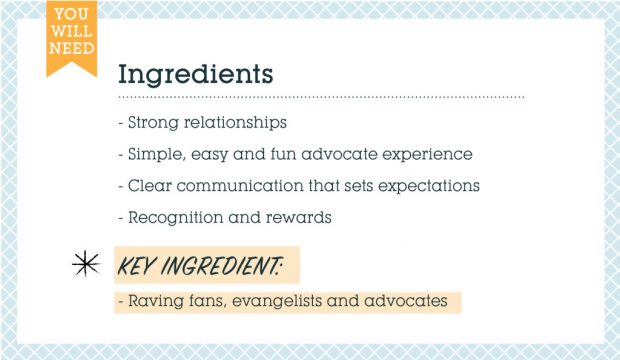
Recipe for a Successful Customer Referral Program | 3 Things You Should Know About Advocate Marketing According to an Expert | Hootsuite Blog

Image via Influitive

Advocate marketing expert Cassandra Jowett, senior content marketing manager at Influitive (and Hootsuite Ambassador), recently joined us for an engaging #HootChat about advocate marketing. Here are three interesting insights she shared that could help you grow your own community of advocates for your business.

3 insights about advocate marketing from the experts at Influitive

1. Brand advocates don’t have to be hard to find

3 Things You Should Know About Advocate Marketing According to an Expert | Hootsuite Blog

“Start in the obvious places: high NPS scores, [people] who say positive things about you on social, [are] satisfied with support, etc.” wrote Jowett in a series of Tweets for Influitive. “Also ask your sales and customer success reps, get existing advocates to refer to their peers—you can always find new advocates.”

Before you can ask anything of your advocates, you need to have some. There are lots of ways to find advocates, but essentially you want to look for people who’ve had a good experience with your brand. Influitive recommends starting with customers who have high net-promoter scores (NPS), which means they’d be likely to recommend your brand to others. They also suggest approaching customers who’ve received customer support and were happy with the experience.

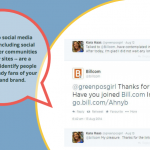
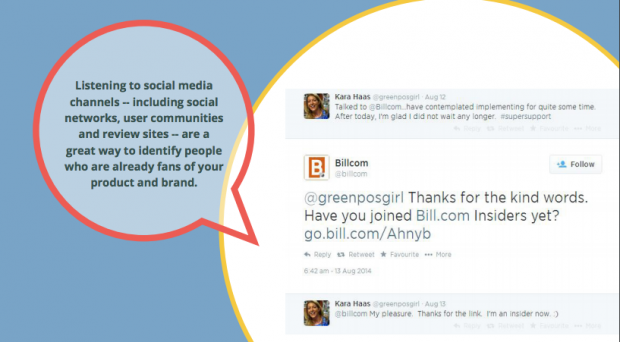
Of course, Social media listening is a great way to find potential brand advocates. Search for people who are saying good things about your brand online, whether they’re sending messages directly to your brand, reviewing your brand or product on sites like Yelp, or simply mentioning it in a positive light in their own posts. You can also look for people who engage with your brand on social, such as followers who frequently Retweet, like, comment on, or share your posts. While they may not be as vocal as those who talk about your brand on social, they’re likely loyal and supportive followers and you don’t want to overlook them.

Social Listening | 3 Things You Should Know About Advocate Marketing According to an Expert | Hootsuite Blog

Image via Influitive eBook on advocate marketing

Then, do the opposite: look for your brand’s critics. As Jillian Wood explains in an Influitive blog post: “Customers who constantly sing your praises are nice, but in order to truly grow as a company you have to know your weaknesses. And who better to discuss your weak points than customers who aren’t afraid to point them out?” You may find that your biggest critics are actually critical because they support your brand. Plus, if you listen to and (when applicable) act on their feedback, you could turn them into brand champions.

And, last but not least, don’t forget to use the resources within your company: ask the employees who deal most often with your brand’s customers (such as sales and customer service representatives) about potential advocates. If your company runs an education program, that can be an excellent place to find brand advocates. And, of course, if you already have some existing advocates, ask them to refer their peers.

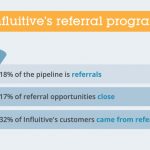
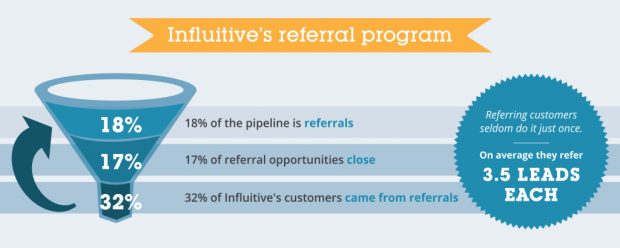
Influitive's Referral Program Funnel | 3 Things You Should Know About Advocate Marketing According to an Expert | Hootsuite Blog

Image via Influitive

Still looking for ideas? Influitive has a great blog post that details five surprising places to find top brand advocates. And you may want to consider creating advocate personas (and no, they’re not the same as buyer personas) to help you find more advocates moving forward.

2. Choose ‘asks’ that reflect advocates’ level of interest

3 Things You Should Know About Advocate Marketing According to an Expert | Hootsuite Blog

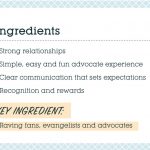
“Start with simple, easy-to-do activities so they can flex their advocacy muscle—Tweets, comments, feedback, shares, etc.” wrote Jowett in a series of Tweets for Influitive. “Some advocates will stop there, that’s fine. Others will want more. Ask [and] listen to find out what those super advocates want. Nurture those advocates toward slightly bigger requests that ‘cost’ more time, effort, [and] reputation—be clear about benefits.”
Once you have a pool of advocates to dip into, you need to activate them. But how?

In an advocate marketing ebook, Influtive recommends making sure that your advocates always have access to at least 10 activities, or ‘asks,’ to choose from at any given time. Some options you can include are:

  • Responding to a comment left about your company in a discussion forum
  • Participating in a case study
  • Speaking at a user conference
  • Referring a potential customer
  • Sharing a soundbite to be used in marketing materials
  • Mentioning the brand on social media, such as Twitter or LinkedIn
  • Attending an upcoming event
  • Tuning into a webinar
  • Reading a case study
  • Writing a product review

Use the ‘rule of thirds’ to provide a mix of asks, education, and fun challenges—like photo caption contests or trivia challenges—for your brand advocates to engage with.

3. Advocacy is a two-way street

3 Things You Should Know About Advocate Marketing According to an Expert | Hootsuite Blog

“The best [advocate marketing] programs are beneficial for both your brand and your advocates—not just one-sided taketaketake,” wrote Jowett in a series of Tweets for Influitive.  “[A] huge mistake [is] focusing too much on your brand’s objectives and not enough on your advocates’ goals. If your number one priority isn’t the advocate experience, you’re doing [advocate marketing] wrong. Plain and simple. Find ways to recognize folks who are already advocates. Say THANK YOU. Surprise [and] delight with small tokens of appreciation.”

So you’ve got some brand advocates and you’ve given them a few asks. Now what?

It’s crucial to make sure that your brand advocacy program isn’t all about your brand. It may sound counterintuitive (after all, your goal is to market your brand), but if all you ever ask of your advocates is that they promote your brand through reviews, messages, etc. you’ll very likely find that pool of advocates drying up.

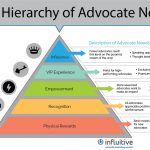
The Hierarchy of Advocate Needs | 3 Things You Should Know About Advocate Marketing According to an Expert | Hootsuite Blog

Image via Influitive

You need to think about your advocates’ needs as well as your brand’s when you set up an advocate program. Create a mutually beneficial relationship with your advocates and they’ll keep coming back. You may be wondering just how to do that. The answer lies in providing value. Make it worth your advocates’ time to participate in your program.

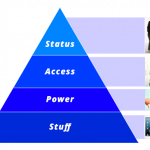
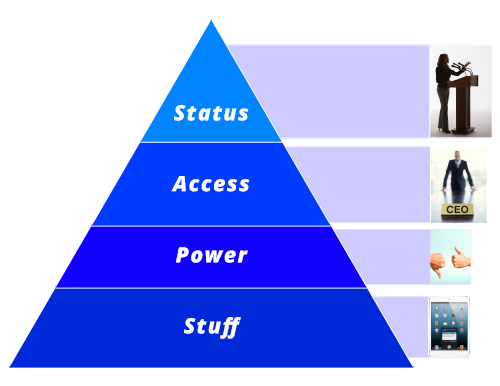
Influitive talks about a framework of four powerful motivators that can guide how you reward your brand advocates: status, access, power, and stuff. The categories form the acronym SAPS.

Advocates will be motivated by different things. Find out what those motivators are and reward them accordingly:

  • Stuff: This is the simplest category and it typically applies to your newest advocates. Don’t underestimate the power of some cool brand swag.
  • Power: Provide opportunities for your advocates to build influence. This includes recognizing their efforts and listening to (and acting on) their feedback.
  • Access: Roll out the red carpet to create a VIP experience for these advocates. This category’s rewards can include special perks, meetups, or education opportunities.
  • Status: These advocates want to be recognized by others. They often verge on influencer status, with larger networks of their own and the power to influence others.

The SAPS Four Powerful Motivators Pyramid | 3 Things You Should Know About Advocate Marketing According to an Expert | Hootsuite Blog

Image via Influitive

In addition to recognizing different advocate needs and rewarding them accordingly, one thing you may want to consider doing that would serve as a perk for a variety of brand advocates is building a community. As Adam Gerard explains in an Influitive blog post: “ Advocacy isn’t just between you and a customer. You’ll multiply your results if you build a community where your advocates can hang out, trade ideas, and learn from each other.”

Use Hootsuite to find and engage your brand advocates. Sign up today!

Sign Up for Free

The post 3 Things You Should Know About Advocate Marketing According to an Expert appeared first on Hootsuite Social Media Management.


* This article was originally published here